
Keith Brower Brown

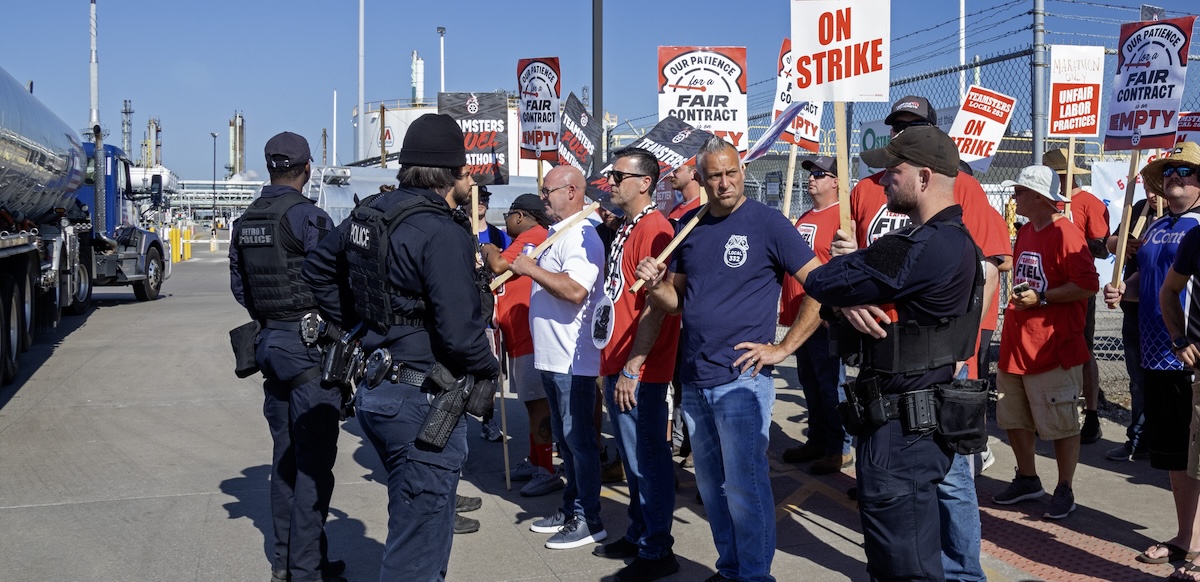
Teamsters at Marathon Petroleum in Detroit have been on the picket line since September 4, their first strike in 30 years. Tankers filled with gasoline regularly exit the massive, belching refinery on a main Detroit artery, as Marathon continues production with supervisors brought in from other facilities.

Main Image: 
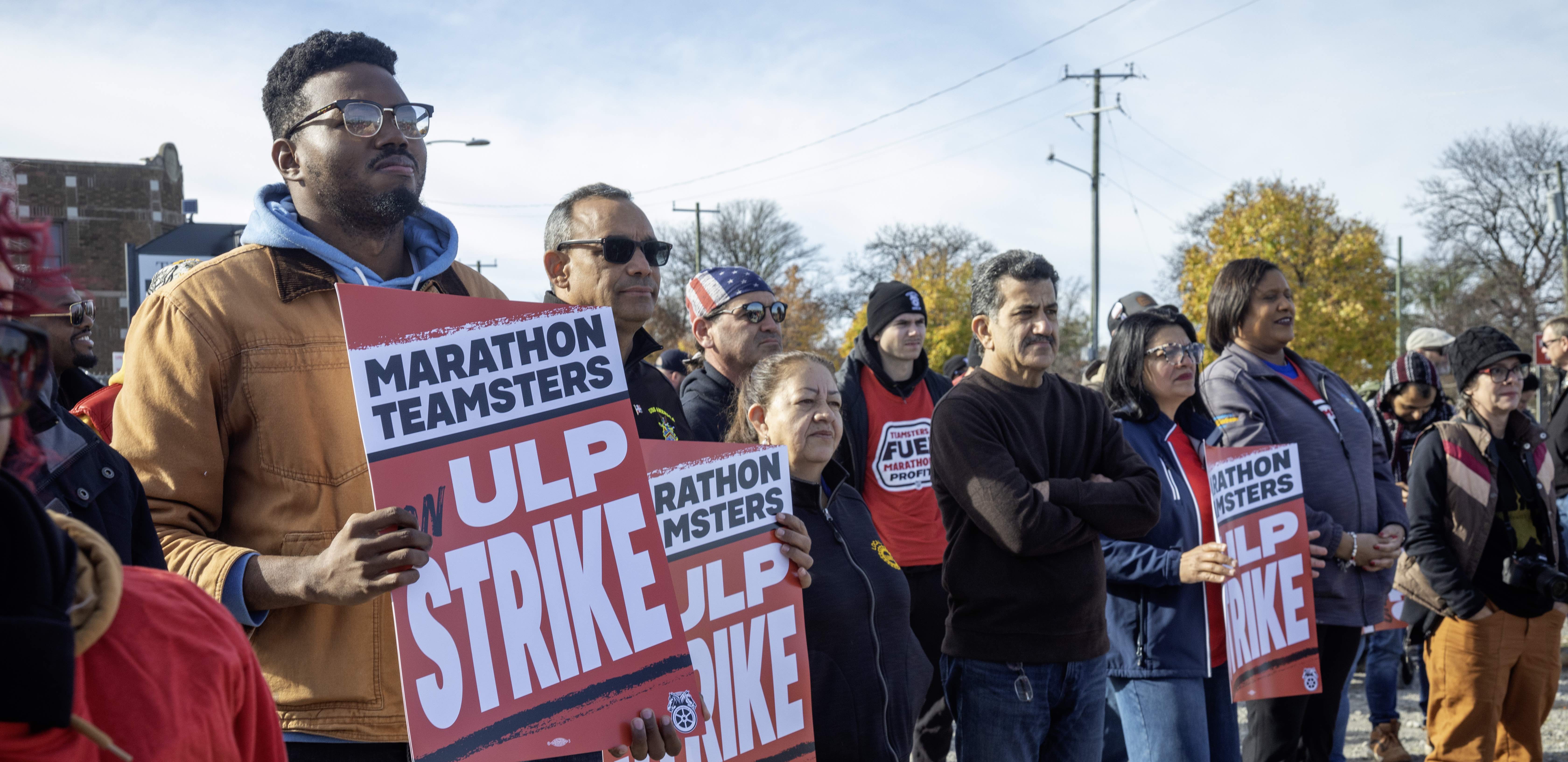
Striking workers and supporters hold signs that say Marathon Teamsters on ULP strike at a rally.

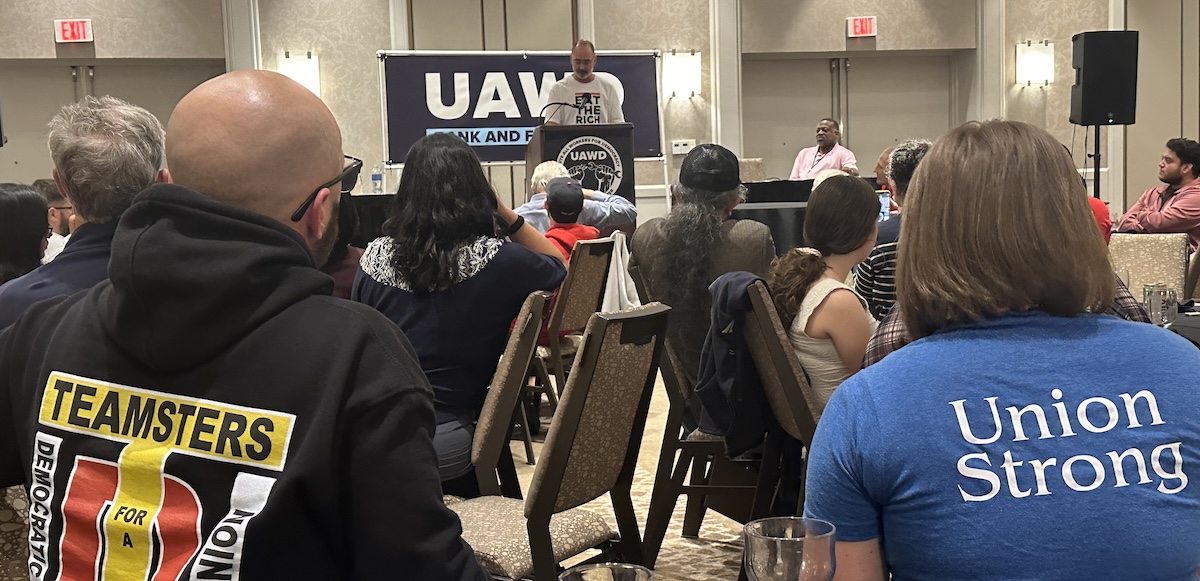
A year after the United Auto Workers’ Stand-Up Strike, the union caucus that helped make it possible is setting out to transform locals still stuck in the mud. Their first step is to fight a new onslaught of layoffs, broken promises, and retaliation from CEOs.

Main Image: 
An audience listens to a man at a lectern. One audience member has a blue shirt with “Union Strong” on the back.

For the first time in 30 years, Teamsters at the Marathon oil refinery in Detroit are on strike. Close to 300 workers walked out September 4. Welders, firefighters, and heavy equipment operators in the union are demanding a raise that keeps up with cost of living, along with better hours. See a great video here.

Main Image: 
a group of picketers face three police officers. They are holding strike signs. A refinery truck is to the left.

If you’re dreading summer on the job this year, you’re not alone.

Every month last summer was the most scorching on world record. Trapped under heat domes, dozens of metro areas busted their longest streaks ever of highs over 100 degrees. Phoenix afternoons were over 110 for a month straight.

On asphalt yards nearly hot enough to melt, bonus-hungry managers forced workers to keep up the usual pace. The results were lethal.

Main Image: 
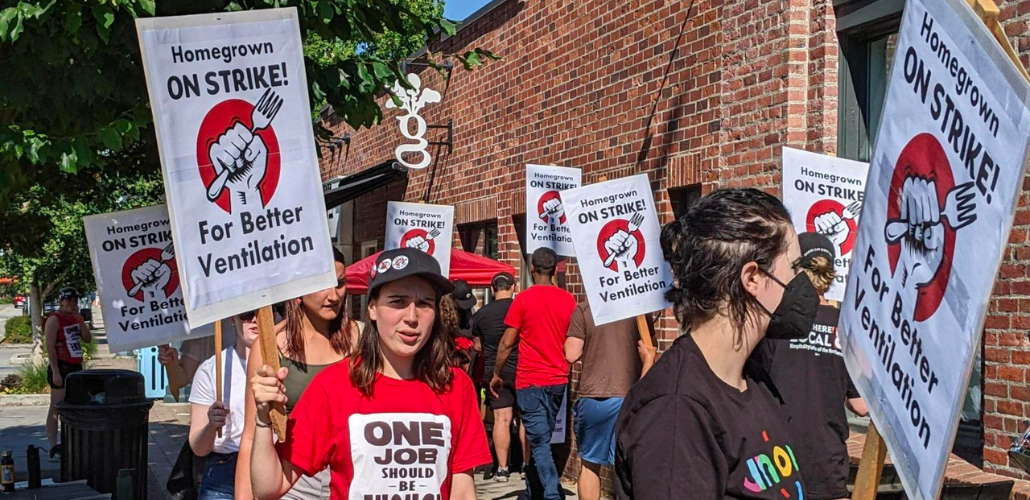
People picket in a circle outside a brick building. Their printed signs say "Homegrown on Strike! For Better Ventilation" with a logo of a fist holding a fork. Person in the foreground wears a red UNITE HERE shirt with the slogan "One job should be enough."

California’s solar power plants now rival the scale of any in the world. What stands out most is how they were built: under union contracts.

Across the U.S., nearly 90 percent of solar workers had no union last year. In California, the situation was different—at least on paper. The vast majority of its solar power plants have been wrenched in place by unionized construction workers.

Main Image: 
Three solar workers in yellow vests lift a large solar panel into place on a solar array.

On breaks between harnessing wires and bolting fenders, Auto Workers across the country are debating the contract offers their strike wrenched out of Ford, General Motors, and Stellantis.

Just a fraction of plants have voted, with the rest set to cast ballots in the next two weeks. Contract details are here.

Main Image: 
Auto workers in red shirts hold signs, including “justice for retirees”

Despite Intimidation, Union Voices Get Louder for Ceasefire in Gaza

Blog: 

In the U.S. and across the world, hundreds of thousands of people have taken the streets to protest Israel’s assault on Gaza, which has killed at least 8,300 Palestinians, including 3,300 children, since October 7. On October 27, the United Nations called for an “immediate, durable and sustained humanitarian truce.”

In the U.S., those protesting Israel’s attacks have faced a wave of repression by employers.

General Motors CEO Mary Barra started her day boasting to company investors how much car sales and revenues have recently climbed.

Two hours later, Auto Workers reminded her who made those revenues happen. The Auto Workers (UAW) struck GM’s most profitable plant, the massive Arlington Assembly, just outside Dallas.

Main Image: 
A woman with a blue Texas Rangers T-shirt and a sign that says “On Strike” smiles as she leads a line of autoworkers towards the camera.

The highest stakes of the United Auto Workers’ strike could be for workers not yet hired, at plants not yet built.

In the last few weeks, the Stand-Up Strike has wrenched breakthrough offers out of all three automakers—Ford, General Motors, and Stellantis—that will have big implications for the transition to electric vehicles (EVs).

Moving beyond the dead-end job security strategies of the past—concessions and corporate partnership—the union is digging footholds to fight for an electric future on workers’ terms.

Main Image: 
Workers in heavy coats stand around picketing in front of a big gray factory. One neon-colored handmade sign says "Worker-led EV transition" with a lightning bolt. Other signs are printed and say "UAW on strike" or "UAW, Stand up, Record Profits, Record Contracts"

Every Friday for the past four weeks, Big 3 CEOs have waited fearfully for Auto Workers (UAW) President Shawn Fain to announce which plants will strike next.

But without warning on Wednesday afternoon, the union threw a haymaker: within 10 minutes the UAW would be shutting down the vast Kentucky Truck Plant.

This plant, on 500 acres outside Louisville, is one of Ford’s most profitable—cranking out full-size SUVs and the Superduty line of commercial trucks.

Main Image: 
An energetic crowd of workers of various ages, genders, and races, Shawn Fain among them, poses in the sunshine outside a building marked Local 862. Many hold printed signs: "United for a strong contract," "Every job a good job," and the UAW logo. Many thrust their fists in the air.

Pages