Keith Brower Brown

An energetic crowd of workers of various ages, genders, and races, Shawn Fain among them, poses in the sunshine outside a building marked Local 862. Many hold printed signs: "United for a strong contract," "Every job a good job," and the UAW logo. Many thrust their fists in the air.

Every Friday for the past four weeks, Big 3 CEOs have waited fearfully for Auto Workers (UAW) President Shawn Fain to announce which plants will strike next.

But without warning on Wednesday afternoon, the union threw a haymaker: within 10 minutes the UAW would be shutting down the vast Kentucky Truck Plant.

This plant, on 500 acres outside Louisville, is one of Ford’s most profitable—cranking out full-size SUVs and the Superduty line of commercial trucks.

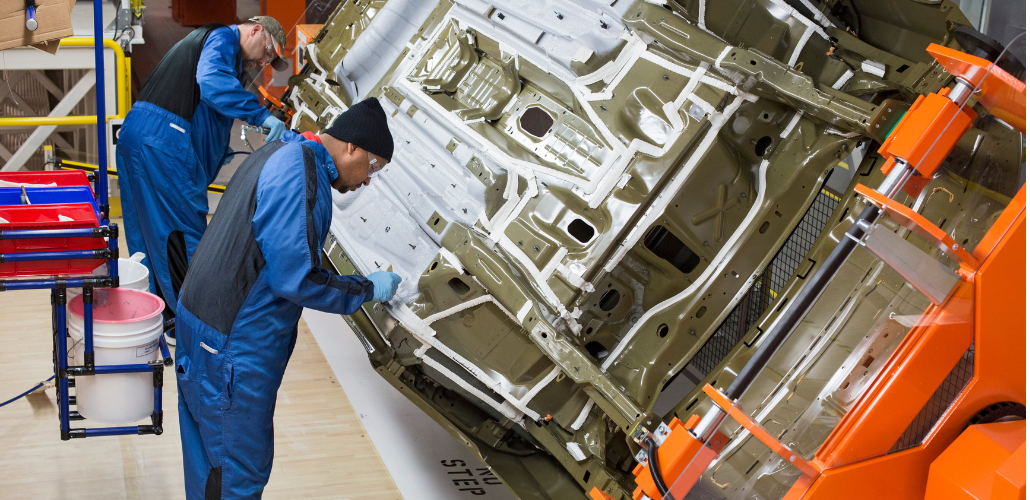
Two workers in blue overalls lean over a car body, doing detailed work

The 18,000 Auto Workers on strike have lit up the labor movement. But the strike is only the most visible side of auto workers’ leverage.

The less visible side is on the shop floor, where organized refusals of voluntary overtime have shut down multiple lines and whole factories for entire weekends since the strike began.

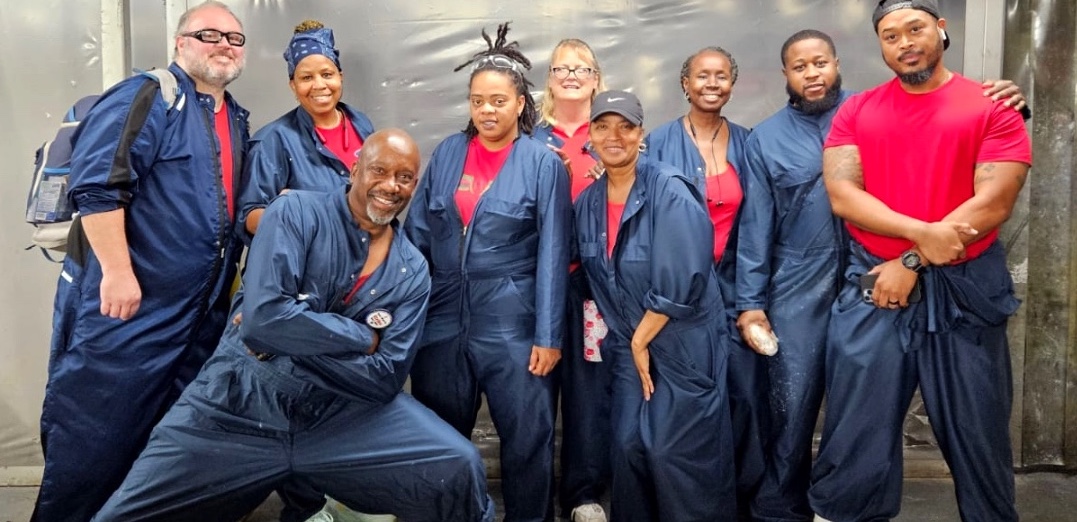
Nine workers (most of them Black, a mix of women and men) pose in red T-shirts and blue work overalls, apparently inside the plant. Their pose evinces camaraderie and confidence. One man in the front has a particularly dynamic pose with a lunge, crossed arms, and a big smile.

Only 13,000 of 146,000 auto workers at the Big 3 companies are on strike, so far. But others still on the job are turning up the heat by refusing voluntary overtime.

At all three companies—Ford, General Motors, and Stellantis—Auto Workers (UAW) members have told Labor Notes about overtime refusals. Many Big 3 plants are hugely dependent on overtime to make up for understaffing.

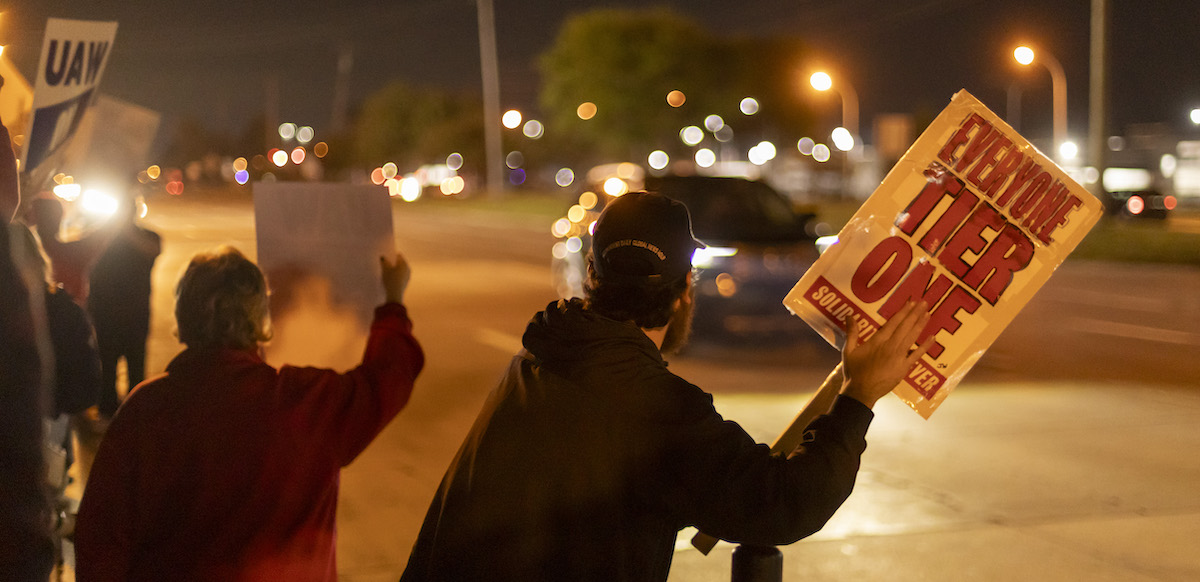
Workers hold signs at night--they are backlit by traffic and street lights but one sign is legible, saying ‘everyone tier one.’

The strike is on. Last night the Auto Workers (UAW) shut down three major assembly plants at Ford, General Motors, and Stellantis (formerly Chrysler). It’s the first time in history the union has struck all three companies at once.

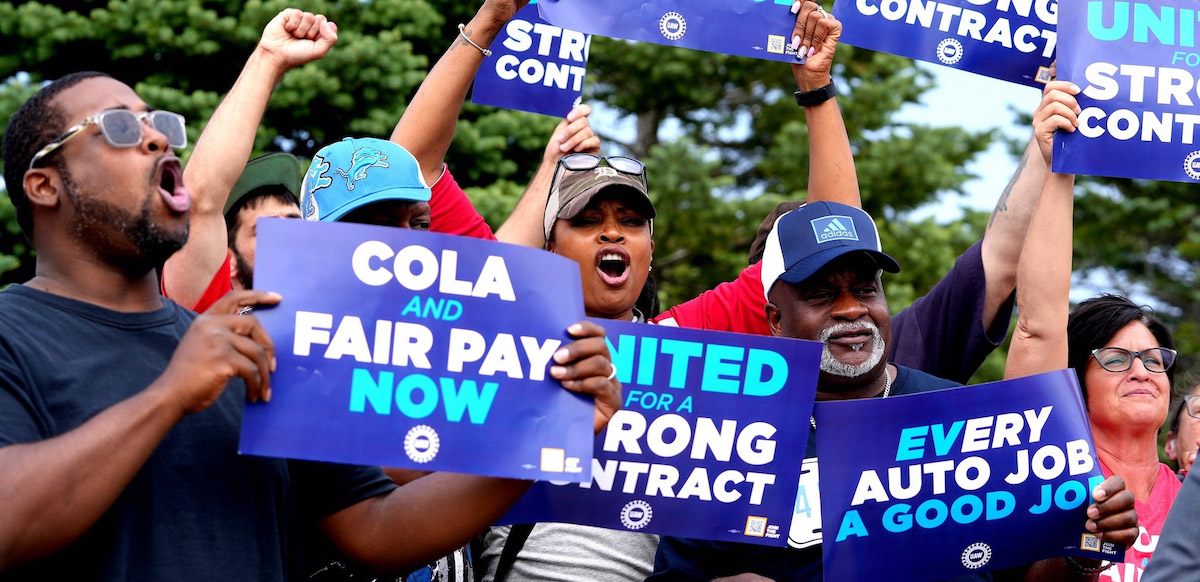
An excited group of six, mostly African American, hold up fists and blue UAW contract campaign signs.

September 14: This article has been updated to identify the plants where workers will strike on day one.

The Auto Workers (UAW) strike, which the union is dubbing the "Stand Up Strike," could be a turning point for the U.S. labor movement—and all of us across the movement can lend a hand to help the strikers win.

Cross-union solidarity can turn up the heat on the Big 3 to end tiers and make green jobs good jobs. It can also boost strikers’ morale and build connections that endure for years to come.

Fight for Safety, Own the Shop Floor
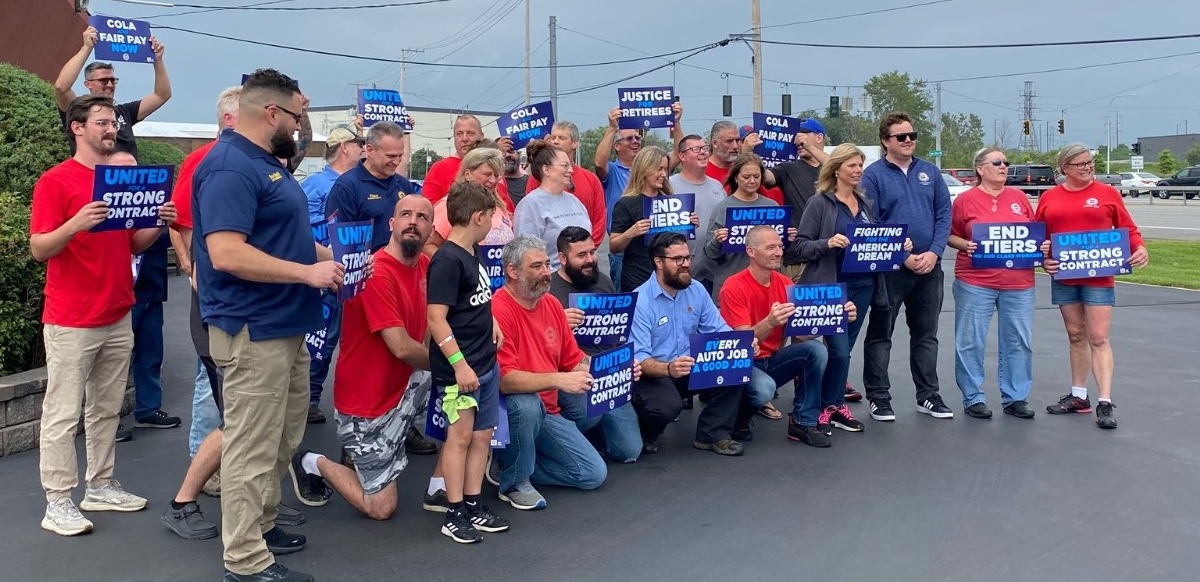
A group of workers in red, blue, or grey shirts hold signs saying “United for a Strong Contract,” and “COLA and Fair Pay Now”

Earlier this year, on the Ford stamping line in Buffalo, sewage started pouring onto the floor. Careless managers had shut down a pump to install new equipment and caused a deluge.

The workers didn't work meekly through the dizzying stench. They shut down their line, fast. And they did it with so much unity that their manager decided not to fight back.

That collective action didn't come out of nowhere. Over the last few years, Auto Workers at Local 897 have built a fighting safety culture.
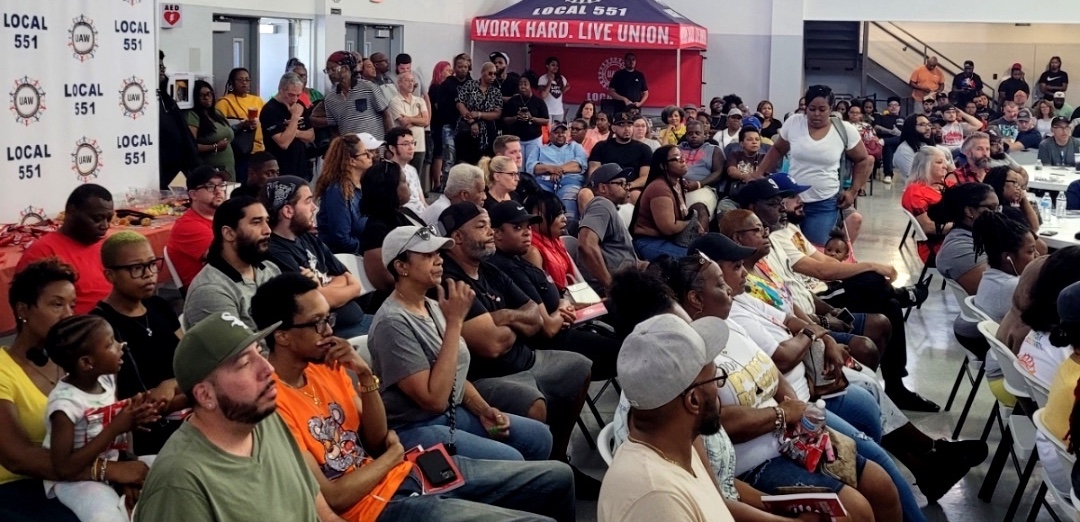
Photo shows a packed hall of autoworkers sitting on folding chairs with standees in the back.

The clock is ticking toward September 14 at midnight, when the Auto Workers’ contracts with the Big 3 automakers expire. The new leaders of the UAW have come out swinging, and in quickly growing numbers, members are stepping up to prepare for a strike.

The agreements cover close to 150,000 workers at Ford, General Motors (GM), and Stellantis.

David Sandoval remembers when he and his co-workers had a whole 72 seconds to assemble their sections of each seat for the Ford F-150, back when he started at a Michigan parts plant in 2004.

Today, 60 seconds is the deadline managers give each team racing at a dozen stations: to bolt the frame together, lay electronics, add heating and cooling gear, set cushions, and attach trim. Robotic lifting arms help on only one or two steps; handheld tools and elbow grease must do the rest. Each crew is told to clear 680 seats in a 10-hour shift.

Whose Green Transition? Ours!

A blue box shows with the notation: “Photo license expired”

Huge changes are coming for our workplaces, quick as a heat wave. This month Joe Biden inked new rules to make all-electrics the majority of new cars sold in America within a decade.

Send Labor-Climate News

Labor Notes wants your stories of organizing with co-workers to lead climate transitions your way. And we’re committed to help however we can.

Pages