
Keep ICE Out of Stores, Say Starbucks Workers

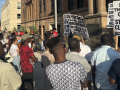
Unionized Starbucks baristas in Portland, Oregon participated in a “Labor Says ICE Out!” march and rally January 31. Photo: SBWU
Since more than 4,000 ICE agents descended on the city of Minneapolis, Starbucks barista Alex Rivers has tried to balance the exacting focus the job requires—baristas are expected to write on every cup and complete every order in four minutes or less, he said—with the gnawing fear that agents could burst in at any moment.
“It became a fear of not if, but when,” Rivers said: “We’ve seen ghost cars on the highway, just abandoned cars. We’ve seen really scary stuff. In some of the neighborhoods that my co-workers live in, we would hear whistles [used by activists to flag the presence of ICE] throughout the day and night.”
Mere weeks ago in the suburbs of Minneapolis, ICE reportedly abducted a 17-year old U.S. citizen from his job at Target before releasing him in a Walmart parking lot. He and a co-worker who was also detained were both injured in the process, Minnesota State Representative Michael Howard told the Star Tribune in January.
“We have minors in our stores, and I am terrified that is going to happen to them,” Rivers said.
On January 14, Rivers and his co-workers marched on the boss to demand that Starbucks stop allowing ICE in their stores. “Current guidance is inadequate; we are empowered to ask ICE agents to leave if and only if they are harassing or disrupting business,” Rivers said. “For the sake of its partners and for the sake of its customers, Starbucks must follow hundreds of Minnesota businesses and forbid ICE from entering without a warrant.” The company did not respond to requests for comment.
Days later, workers at six unionized Starbucks locations in Minnesota held a one-day unfair labor practice strike in response to "the company's labor law violations committed in recent months." Many joined the 50,000-strong “ICE Out of Minnesota” march later that day.
‘KEEPING US SAFE?’

Other Starbucks baristas have since followed suit: workers in Ann Arbor, Chicago, New York City, Philadelphia, Pittsburgh and St. Louis have since held marches on the boss or other workplace actions demanding that ICE be barred from their worksites in the absence of a signed judicial warrant.
“It’s very possible I’ve served a customer who is now being targeted by ICE, and that’s not okay,” said one worker who participated in a workplace action. They asked to remain anonymous due to their immigration status. “It might not even be customers. There’s plenty of immigrants who work at Starbucks. How is Starbucks keeping them safe if they’re just letting ICE agents in?”
“There’s no indication that they’re going to change the policy,” the barista said. “They don’t seem to trust us to know what’s best for us or the people in our community, but they’ve never been in our community. We, the workers, are the ones that have the feel for what is happening on the ground, so to get zero response from the company about something so important is ridiculous, it’s a little maddening.”
“We’ve had customers that have come through the drive through in recent months, regular customers that I hold dear to my heart that have said they’ll start to come in less because they’re afraid to leave their homes,” Rivers said. “If we feel uncomfortable, imagine how customers feel if ICE agents [could] potentially come in with tactical gear, and we don’t know what the next minutes or even seconds are going to look like.”
“You have a policy for everything. You have a policy to make sure that we write on every single cup when we are knee-deep in mobile orders, and I have a manager that’s staring at me making sure I do that,” Rivers said. “But what do we do in this unprecedented situation?”



You must log in or register to post a comment.