Starbucks Is Bargaining Backwards, Baristas Say
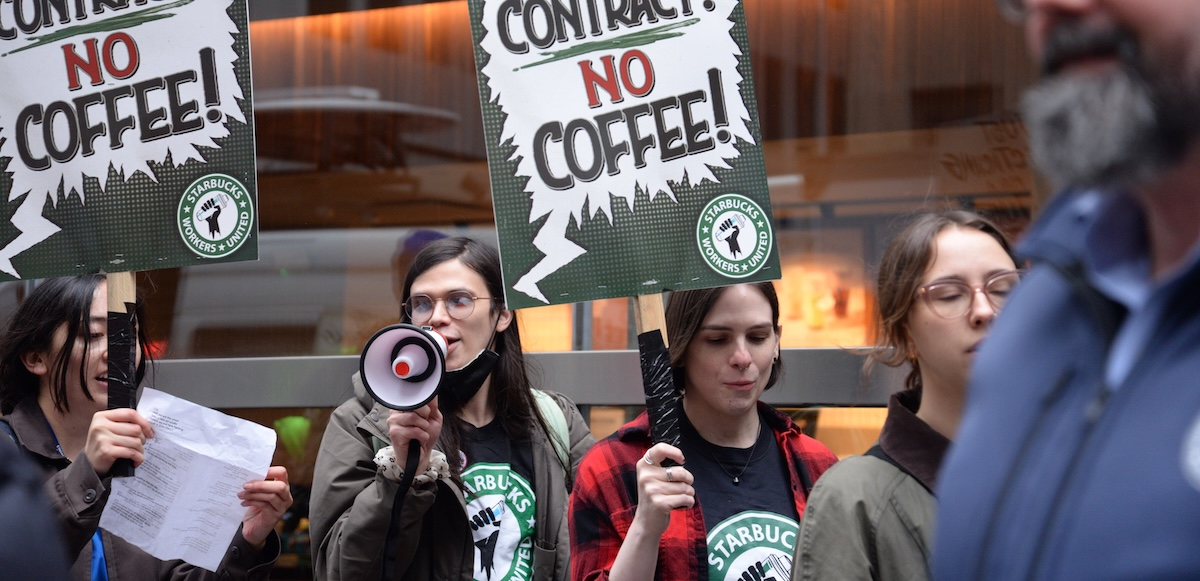
Mina Leon (with megaphone) leads chants at a Starbucks picket in downtown Manhattan in October. Workers at hundreds of stores struck for months this past winter to get the company back to the bargaining table. Photo: Jenny Brown
Union baristas are finally back to the negotiating table with Starbucks, but the workers charge that rather than progressing, the company is reopening already agreed-upon issues.
“They're trying to move backwards on issues we've already settled instead of settling the few that we have left,” said Mina Leon, a barista in downtown Manhattan who struck for two months to get the company back to the table.
“These were not small details, these were things that we had already fought for and won after months in bargaining in 2024,” said Jasmine Leli, a Buffalo, New York, barista and member of the Starbucks Workers United bargaining team.
The union has filed unfair labor practice charges against the company for regressive bargaining. Those join 600 other labor law violations which are still unresolved. During the four years of the organizing campaign, the company has racked up a record number of violations, and still owes millions in back pay to workers.
The company said it reopened agreements to “reflect current business realities, customer expectations, and partner interests.” Starbucks calls its workers “partners.”
STRUCK TO GET BACK TO TABLE
After a year of no talks, workers at hundreds of stores struck in November, December, and January to force the company back to the negotiating table. Around 230 stores struck at the peak of the walkouts. Starbucks Workers United now represents 550 locations out of 10,000 run by the company in the United States.
Negotiations broke off in late 2024, and while the sides went to a mediator in April 2025, the company refused to move on wage and staffing demands.
The union had been demanding $20 an hour as starting pay at all stores. They’ve now scaled back to asking for $17 an hour for the lowest-paid workers. Baristas in 43 states start at $16 and under. They also want annual 4 percent increases. Token raises over the years have been eaten up by inflation, leaving workers worse off, baristas said.

The other big issue is staffing. “Understaffed stores have led to long wait times for customers while baristas who want more hours aren’t getting enough to pay their bills,” said Leli.
NOT ENOUGH HOURS
The union is demanding three people in stores at all times, as an answer to both overwork and safety issues. The company is notorious for hiring additional workers while current workers are asking for more hours to survive. The union is demanding more hours for existing employees before new hires.
Baristas say the wages and constrained hours are such that they have to rely on food stamps and have to sign up for Medicaid, since they can’t get enough hours to qualify for the company’s health care plan.
New negotiating sessions are scheduled soon. The union is asking community members to create pressure by leafleting non-union stores on April 21, asking customers to avoid the company until a contract is in place.
The union is also asking people to spread the word about deleting the Starbucks app.
“We need you to stop buying Starbucks and delete the Starbucks app from your phone,” Leon told a union crowd in Manhattan on Sunday. “No contract, no coffee.”
To get a toolkit for the April 21 action, sign up here.