Canadian Construction Workers Walk Out Against Tiers
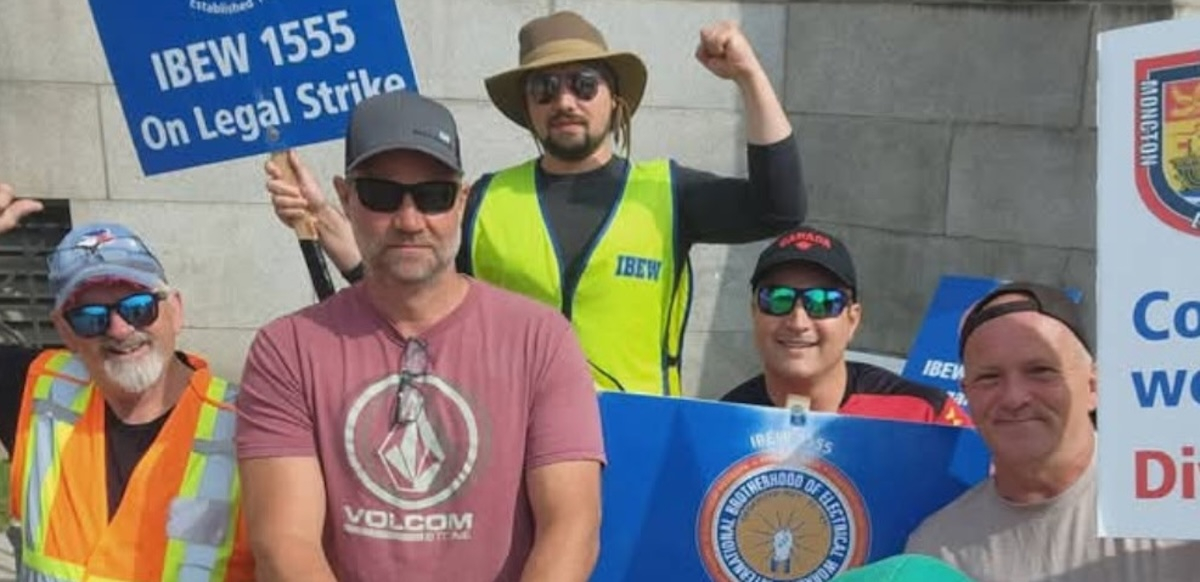
Canadian electrician and carpenter strikes in New Brunswick are focused on ending wage tiers and winning pay that catches up to inflation. Photo: Ian Cline, IBEW 1555.
In the building trades, strikes have become vanishingly rare. But since late June, strikes by major construction unions have rocked jobsites across a Canadian province.
New Brunswick has a million residents on Canada's Atlantic coast, sharing a long border with the state of Maine. Construction investment has nearly doubled there in the last decade, especially for residential and infrastructure sites. Meanwhile, the number of construction workers ticked up by just a third.
Union hardhats saw a tight labor market could increase their leverage. But at this year's bargaining tables, construction bosses stonewalled union demands, aiming to maintain lower wages and divisive tiers.
In late June, two Electrical Workers locals launched strikes on all their construction sites, taking about 400 workers off the job. At the same time, a Carpenters local struck two contractors, with about 40 workers walking off. All have stayed out since.
AGAINST TIERS
At the heart of the strikes are demands to end divisive tiers, and to keep wages ahead of a spiraling local cost of living. Their unusually low pay by union standards may have helped international officers accept that a strike was needed.
“In a lot of jurisdictions it's true electricians make all the money,” said Cameron Maxwell, a striking electrician who joined the union four years ago. “Here that's not the position we're in. Our pay is much lower than for plumbers, drywallers, pipefitters, and [workers from other trades] are all surprised.”
“We were aiming at about a 20 percent raise over four years, because we're so far behind,” said Ian Cline, a veteran electrician who moved from Manitoba to New Brunswick this year. “There are apprentices in other trades and locals who make more than I do.”
During past downturns for construction, IBEW Local 1555 conceded to demands for an unusual tier system dividing up pay scales for commercial work, like the hospitals and schools that provide a steady source of union jobs.
“Industrial, commercial, residential having different pay scales isn't rare,” said Maxwell. “But the contractors pushed through manipulative language to divide the membership between A-, B-, and C-Rate commercial jobs, based on the size of the site.”
In 2022, the local officially struck for the first time, staying out for less than a month. “We ended up with an agreement, because contractors didn't dig in as much as this time,” said James Hoffe, a top officer for the local. They got a pay bump, but the tier system stayed.
Ending the commercial tiers is a top demand for members of IBEW Local 1555. “Whether you're paying $4 million for this project or not, we’re doing the same work as an electrician,” said Cline.
Other building trades joined the electrician walkoffs for a few days, despite contract provisions against that kind of solidarity strike.
“They have no-strike clauses. Taking that step was a risk, but it impacted the whole project,” said Jeff Morash, an officer with the local. That builds on a local tradition of solidarity.

“The other trades, whether they're plumbers, drywallers, whatever, we'll try to honor their pickets. If we can legally take a few days, we will. And there are members who will take sick days to support.”
ONE PROVINCE WAGE
Carpenters are also striking to keep members united across jobsites, where they do crucial cement and drywall work.
Thirty contractors across New Brunswick agreed to demands from Carpenters Local 1386 for a raise of about $6 U.S. per hour over the next four years. That amounts to about $9,000 U.S. in extra pay a year for a carpenter, which will help members keep ahead of local grocery and gas costs skyrocketing after new U.S. tariffs last year.
But two contractors, accounting for about an eighth of work for local members, have refused to join and bargain alongside the main employers association. The Carpenters decided a focused strike at those jobsites was needed.
“We want parity across contractors,” said James Dawson, a Carpenters local officer. “We intend to stand them down until we get it: one province wage across New Brunswick.”
Carpenters have held public rallies and festive picket lines, welcoming community supporters to join. “The contractors call this mob mentality,” said Dawson. “We call it a good time for a barbecue.”
BREAKING THE MOLD
These protracted strikes stand out, given that Electrical Workers and Carpenters are frequently blocked from striking by international officers, and sometimes by rules that deny them binding votes on their own contracts.
Thousands of Los Angeles electricians voted by 75 percent in July to authorize a strike and repeatedly reject a contract offer, only to have international officers block a walkoff.
Canadian building trades have sometimes had a bit more autonomy to follow their own blueprints. In this case, relatively low pay despite local construction growth probably further helped their case.
Carpenters have received strike pay support from their international. Electrical Workers have informal rules prohibiting a strike fund for construction locals, and have sustained their New Brunswick strike based on personal savings and donations from other locals of their union.
Despite the costs, members say the strike has continued with strong internal support, and nobody has crossed their picket lines, because the stakes for the future of their work are clear.
“This area is going to have an infrastructural boom,” said Cline, the veteran electrician. “Clean energy is a big push these days, with a solar plant lining up. If we can get a good contract, that will help bring people in for those jobs.”
“When the strike started, I was working on a cardiac care unit, a major addition to the hospital,” said Maxwell. “Obviously it's not the kind of project you want to stall with a strike. The leverage we're given isn't always pretty. We've only got the tools we're given.”