Stewards Corner: Laying the Foundation for Change in Your Union
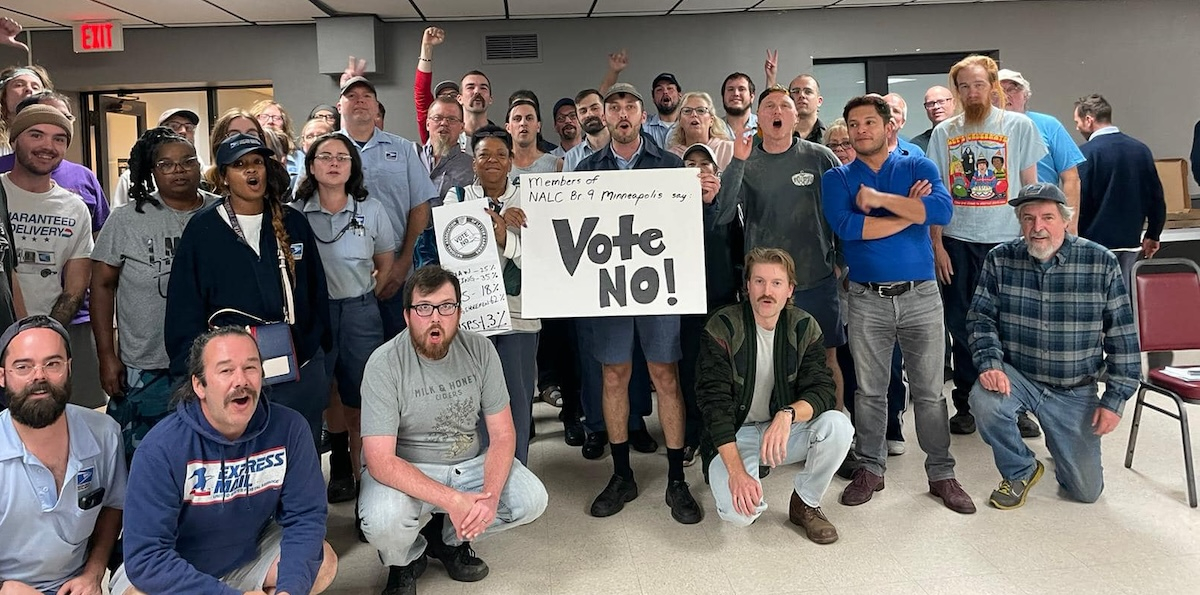
In Letter Carriers (NALC) Branch 9 in Minneapolis, a group of members started meeting to talk about how to change the culture of their branch. Article excerpted from Running for Local Union Office: A Labor Notes Guide. Photo: Rob Darakjian
Revitalizing a local union may require electing new officers with a different vision. But running for office should not be your first step.
Successful campaigns for union office usually start by organizing against management first, often years in advance of any eventual run.
A group of workers wants to accomplish something—better pay, more control over their conditions on the job, an end to tiered wages or benefits—but their officials, or something about the way their union operates, is in the way. So they begin to change the culture of the union, getting more members involved in building power on the shop floor.
Your ultimate goal, after all, is not just electing new leaders, but building a stronger union. And doing that means involving as many members as possible.
WHERE TO START
The good news is you can begin organizing for change in your union any time.
“Your campaign should start with workplace fights that involve your co-workers,” says John Pearson, a nurse at Highland Hospital in Oakland, California, and former president of the SEIU Local 1021 chapter there. “You need that type of credibility and trust from people to be able to lead successfully.”
Before running for office, Pearson helped lead a campaign to defend breaks, involving nurses throughout the Alameda County hospital system, which resulted in a big back pay settlement. He also led an effort to save a substance abuse clinic from defunding.
“The word spreads if you’re effective at fighting in the workplace—people know to ask you for help,” says Pearson.
This type of organizing shows members that you have a track record, and that collectively members can make a difference.
The Caucus of Rank-and-File Educators (CORE), which won leadership in the Chicago Teachers Union in 2010, built up strength in campaigns like a fight to stop the school district from closing dozens of neighborhood schools and replacing them with privately run charters.
“So much of our caucus was really forged in the fight against school closings,” says Norine Gutekanst, who was a third-grade teacher at the time. Caucus members attended school closing hearings and teamed up with community activists to camp out all night in front of threatened schools. The leadership of the union, meanwhile, was absent from the fight.
CORE was already “doing what the union should have been doing,” said Chicago social studies teacher Bill Lamme. “So when the election came, [CORE activists] didn’t say ‘Elect me and I’ll do this.’ They said, ‘This is what we’ve been doing and we’ll keep doing it.’”
ATTEND MEETINGS
If you’re serious about getting involved in and transforming your union, you should be regularly attending union meetings, even if the meetings don’t allow for much debate. Bring other members who share your views. By participating, your group can shake things up.
“The first time you attend a meeting, just listen,” says Ken Paff, longtime national organizer with Teamsters for a Democratic Union.
“Later on,” Paff says, “you can make a proposal, and organize your group to present it. Talk to members before the meeting; draw them in. Get things out to the members, not only to make your group transparent, but also to make union meetings that way.
“Tell people there will be a motion on the pension plan, or another burning topic. Ask them to come support the motion. Put it out in writing. Get them to sign a petition in support of it.”
In Letter Carriers (NALC) Branch 9 in Minneapolis, a group of members started meeting to talk about how to change the culture of their branch, including its meeting agendas. “We had a president of over 30 years who would just use Robert’s Rules to keep people down,” says letter carrier Chris Pennock.

But the group of reformers kept bringing more members to meetings. Eventually their motions started winning. Pennock got 10 minutes on the agenda to talk about fighting post office closures. It was a small step, but a co-worker told him: “I don’t know if you know how historic that is—I’ve never seen a motion pass that the executive board not only didn’t support but were actively opposed to.”
Their organizing helped lay the basis to run a reform slate; Pennock is now vice president of Branch 9. “Have faith that you can change the culture,” he says.
At the same time, “it’s a mistake to think that meetings are the important thing,” says SEIU Local 1021’s Pearson—especially since most members won’t attend meetings. You want to find other ways to get them involved in the union.
“Talk to people in the workplace, especially while you’re working, if you can,” advises Pearson. Some other activities to consider:
- Holding classes or discussions on issues the union is not addressing
- Getting members to join rallies or picket lines in solidarity with other unions
- Organizing a “Vote No” campaign on a subpar contract
- Campaigning to change your bylaws to make the union more democratic
BE AN INFORMATION SOURCE
Is your local union run like a small club or clique, with a few insiders making all of the decisions and everyone else wondering what’s going on? Do members feel they don’t have a voice in critical decisions about their jobs, benefits, and contracts?
Members want information, and informed members are more active members. You can start building a campaign for change by becoming an information source. Here are some ideas:
- Inform members about the contract and how to enforce it
- Take on workplace issues and organize contract enforcement campaigns
- Organize short gatherings at lunch or after work to talk about workplace or union issues
- Distribute bulletins on workplace and union issues
- Hold online or in-person workshops or an educational conference
- Use an app like WhatsApp to build communication and spread information among members
- Start a Facebook group to share news about your employer and give members a space to communicate with each other
- Start an email and text list to send other members news about your local
Don’t spread rumors or conspiracy theories. Be reliable and provide information that the members can use. Set a positive and constructive tone, especially if you’re using social media.
Remember, your credibility is your most important asset.
GETTING MEMBERS INVOLVED
A one-person crusade isn’t going to change your local union, and it isn’t what the union needs. You need teammates and helpers if you want to accomplish long-term change.
“Every day you need to ask yourself, ‘Who did I talk to today?’” says Vance Smith of Teamsters Local 135 in Indianapolis. “Get out in the field and have one-on-one, personal conversations.”
Have realistic expectations. Not every member is going to want to become as active as you are.
If someone wants to get involved, start them off with small jobs first, like talking to you about problems where they work or introducing you to other members. Thank them for their efforts and let them know their work is valuable.
“In every workplace, workers show a range of knowledge about and interest in the union, from A to Z,” says longtime organizer Joe Fahey. Don’t try to move people from A to Z immediately—instead, move them from A to B, and so on.
Once they’ve gotten their feet wet, ask them to do bigger jobs, like passing out a leaflet or standing with you in the parking lot while you do that. Give them options.
Remember, people’s lives are complicated. If someone doesn’t want to get involved at first, don’t write them off. Stay in contact and ask them again later. You’re building a network here, so cast as wide a net as you can. People can surprise you.
The more members you have working with you, the more work you can get done. Especially in a local that represents multiple workplaces or industries, getting lots of members involved in your campaign can be critical.
Is It Working?
Here are some of the ways you can tell your organizing is having an effect:
- More members are involved in a passive way, like reading a leaflet.
- More members are taking a small action step, like wearing a button or signing a petition.
- Some members are taking on organizing tasks, like passing out flyers or making phone calls.
- Some members are becoming leaders and taking initiative.
If these things aren’t happening, take a step back and re-evaluate your strategy. Are you doing too much yourself? Do you need to reach out to more departments? Do you have the right message?
This advice is drawn from the Labor Notes book Democracy Is Power by Mike Parker and Martha Gruelle.
This article is excerpted from Running for Local Union Office: A Labor Notes Guide. Order the book ($20) and find resources including how to be effective at union meetings, a list of labor education programs, and more at labornotes.org/runningforoffice.