
Can Transit Workers Escape the Death Spiral?
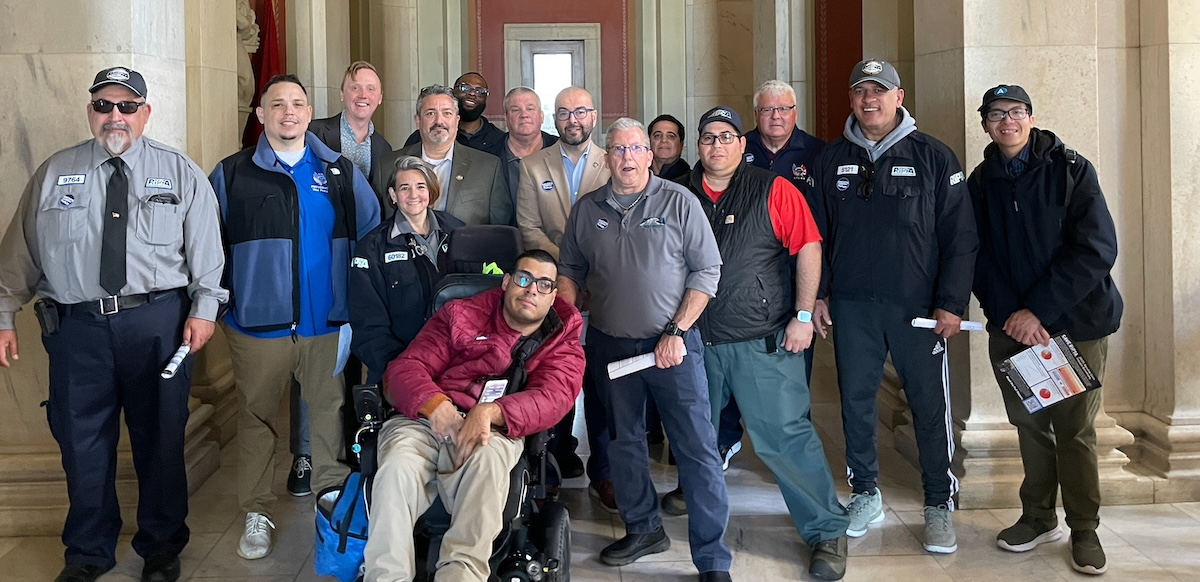
Rhode Island bus drivers have been passing out flyers to passengers about proposed route cuts and asked them to attend state hearings. Photo: Save RIPTA
Public transit has been in a deep crisis since the Covid pandemic. Transit systems weren’t adequately funded to begin with. Then, as remote work increased, ridership declined. Now, emergency relief and infrastructure funds passed during the Biden administration have dried up.
When transit systems make cuts, service quality declines. As public transit gets dirtier, more dangerous, and less reliable, the public responds by using it less. This “death spiral” is a dream scenario for privatizers, who employ the “four D’s”: Defund, Degrade, Demonize, and Dismantle. Transit workers and unions become the face of the failing system, while the wealthy actors who are actually responsible remain invisible.
To fight back, transit unions need to make common cause with the public by waging state and local campaigns for increased funding. The money is there. Take it from Massachusetts: Since 2022, the state’s “Fair Share” tax on millionaires has raised $867 million for the Massachusetts Bay Transit Authority.
CUTS HIT DEEP
In 2023, the Rhode Island Public Transit Authority was staring at a fiscal cliff. The transit advocates who launched the Save RIPTA Coalition knew they needed to engage the Transit (ATU) Local 618 bus operators, mechanics, and clerical staff who make the system run. “They needed to be on board from day one,” said Dylan Giles of the Providence Streets Coalition.
In 2024, the coalition won a short-term fix: The legislature okayed a one-time investment of $15 million that funded an 18 percent raise for bus operators, temporarily stemming a worker exodus. But the 2025 budget proposed the largest service reductions in RIPTA history.
Local 618 and its allies sprang into action. Drivers passed out flyers at bus stations, talked to passengers about the proposed route cuts, and asked them to attend community hearings. “I try to explain to them why the cuts are happening and point them towards pressuring their local legislators,” said driver Thomas Roderick. Many riders became transit advocates because of these conversations.
Workers and riders bused together to the state capital to lobby. The local hosted a Save RIPTA Coalition retreat.
Unfortunately, the cuts went through. But the coalition stayed active. “They fight for our members just like we do,” said Local 618 President Walter Melillo.
But the cuts have been brutal. A coalition report showed that 45 of 63 bus routes saw significant service reductions and ridership declines. Eighty-eight percent of union members said the cuts had made it harder for them to eat and take bathroom breaks; 52 percent were thinking about retiring.
As buses run later and are more crowded, rider-driver conflict has increased. “It’s affecting people's life at school and on the job,” said Melillo.
There will be no more bus service to Rhode Island’s popular beaches on Sundays. And once you lose a bus route, says 40-year RIPTA driver Joe Cole, it’s hard to get it back.
The coalition is now pushing the legislature to guarantee sustainable funding, including $5 million to undo the latest cuts, reallocation of a 7 percent rideshare tax for public transit, and increasing RIPTA’s share of highway maintenance funds.
GOING ON OFFENSE
Illinois transit unions had a huge win last December, when Governor JB Pritzker signed a bill providing $1.5 billion in new funding for the transit agencies serving Chicago and its suburbs. This victory was secured by the Labor Alliance for Public Transportation which includes ATU, the Machinists, Teamsters, and other unions.
This win by blue-collar unions in Illinois is a rarity: It calls for transit infrastructure expansion, not just survival. It includes plans for expanding rail lines, establishing a transit ambassador program (with trained staff on board to assist customers), and new safety measures. The bill also creates a new Northern Illinois Transit Authority, empowered to institute a universal fare system and coordinate transit schedules.
The state’s transportation agencies had been about to suffer a $230 million shortfall in 2026. That gap would have grown to $937 million in 2028, forcing 40 percent service cuts.
The Alliance’s “United We Move” campaign started in 2023. “We approached this like an organizing campaign,” said Brian Shanahan, railroad coordinator for the Machinists. It took a lot of discussion in central labor councils and local union halls to get transit unions ready for coordinated lobbying.
Now the coalition is fighting against replacing paratransit drivers with Waymo driverless vehicles.
A FIGHT FOR EVERYONE
Last year in Dallas, ATU Local 1338 teamed up with a community coalition, the Dallas Area Transit Alliance, to halt proposed funding cuts. Members spoke out at agency board meetings and public hearings.
“I love when DATA members show up,” said Local 1338 Recording Secretary Sabrina Creque. “They mobilize a diverse set of people,” including college and high school students. “We want to show that we’re in this fight for everyone, not just union members.”
Louisville’s transit authority hasn’t changed its funding model since 1974. By 2024 the agency had a $30 million budget shortfall and called for massive service reductions. ATU Local 1447 partnered with the Louisville Democratic Socialists of America for a “Get On The Bus” campaign, asking the metro council to increase the occupation tax that funds transit by 0.2 percent.
Louisville DSA members met with ATU researchers to plan the campaign. ATU members phone-banked and wrote postcards to council members, and DSA canvassed in targeted districts. “We’re trying to change the way people think of transit, so they realize how much we all benefit from it,” said Local 1447 President Lillian Brents.

Pittsburghers for Public Transit formed a partnership with ATU Local 85 and started a fellowship program where recent retirees work part-time organizing with riders and union members to advocate for transit funding. This program is expanding to Lancaster and the Lehigh Valley.
Transit for All PA mobilized last spring when Senate Republicans refused to pass a budget to fund public transit. The Southeastern Pennsylvania Transit Authority (SEPTA), covering Philadelphia and surrounding suburbs, released a doomsday budget canceling 50 bus lines and five regional rail lines. Smaller agencies in cities like Pittsburgh, Harrisburg, and Lancaster also faced devastating cuts.
Transit locals joined rallies, phone banks, and canvassing efforts across the state. Governor Josh Shapiro was forced to use emergency funds for SEPTA. But the coalition will be in for another fight next budget season.
In Canada, ATU locals were a part of the Keep Transit Moving Coalition that helped secure emergency funding during the pandemic. Local 113 in Toronto has stayed active in the TTCriders coalition. It is currently working to defeat Bill 98, Ontario premier Doug Ford’s attempt to take over the Toronto Transit Commission and set its fares.
TRANSIT ON THE BALLOT
In California, many transit agencies are in a terminal crisis that could make the state’s notoriously bad traffic even worse. Transit advocates are pushing ballot initiatives to raise taxes for the desperately needed funding.
In the Bay Area, a broad labor-community coalition lobbied for SB 63, to allow a ballot measure that could bring in almost $1 billion a year. The coalition fought for a more progressive tax on the largest businesses, but corporate lobbying turned it into a sales tax. Still, the coalition is rallying to pass the measure in November.
If it fails, Bay Area Rapid Transit riders would face fewer trains and higher fares. Service would end at 9 p.m. instead of midnight, and 15 stations would close. AC Transit bus service would be cut to half of pre-pandemic levels. Transit workers would lose jobs.
The ballot measure, Connect Bay Area, requires 186,000 signatures to get on the ballot, and fortunately the Connect Bay Area coalition has well exceeded that number. BART workers in ATU Local 1555 have gathered signatures at May Day and No Kings marches. SEIU Local 1021 (BART maintenance staff), and UAW Local 4811 (academic workers who rely on public transit), are active too.
“We’ve been gathering signatures like crazy,” said ATU Local 192 Vice President Nathaniel Arnold, who represents AC Transit workers.
The San Francisco Central Labor Council coordinated door-knocking in the affected areas. The Alameda Labor Council hosted trainings for canvassers.
Now 305,000 signatures are awaiting verification so that voters can decide in November.
WRITING IS ON THE WALL
Sacramento Regional Transit does not have a dedicated funding source. Transit cuts haven’t been proposed there yet, but for ATU, the writing is on the wall. “If they’re gonna take school funding, why wouldn’t they go after public transportation funding?” asks Local 256 President Crystal McGee Lee. So the local is being proactive.
The Safer Sac Streets coalition, formed last fall with support from ATU Local 256, is backing a new transactions and use tax on the sale and use of goods in Sacramento that would generate an extra $75 million per year.
Local 256 has been gathering signatures and passing out flyers on buses. “We try to schedule events at times we know ATU members can come out and support,” said campaign co-chair Sam Rice.
Correction: The section on SB 63 and Connect Bay Area has been updated to clarify the relationship between the bill and the ballot measure, and the current status of the effort.





You must log in or register to post a comment.