Rochester Nurses Stood with Their Nonunion Co-Workers—and Stopped Millions in Health Care Cuts
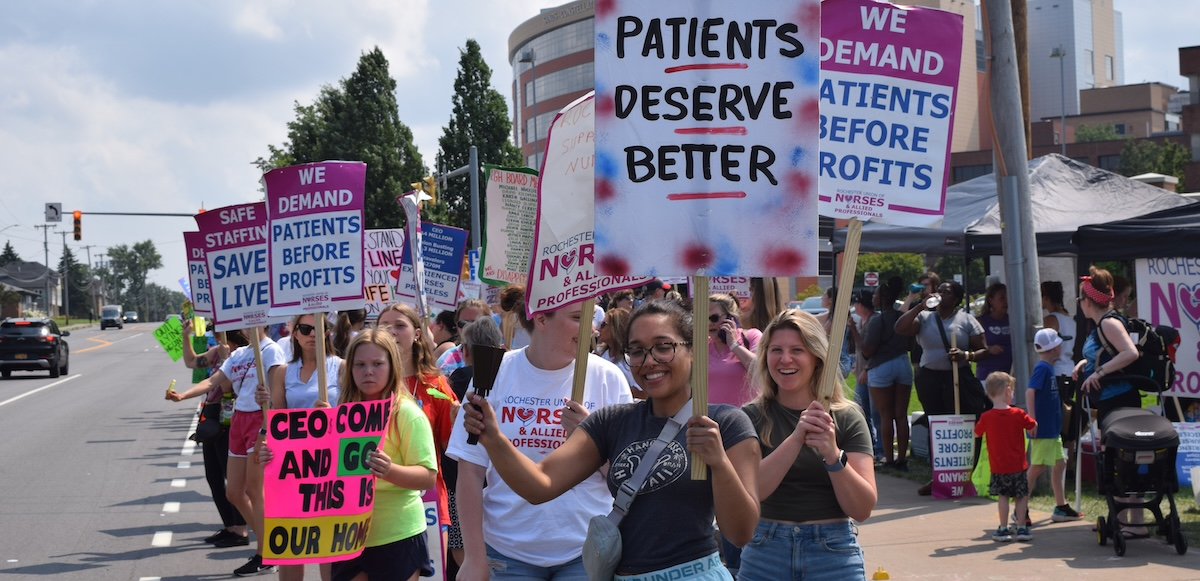
Rochester nurses stood with non-union co-workers when the hospital tried to slash their health insurance. Now many of those co-workers have voted to become union members themselves. Photo: RUNAP
What should union workers do when their nonunion co-workers come under attack?
When our health care system in Rochester, New York, announced deep cuts to employee health benefits last November, “we started hearing from people right away,” said critical care nurse Carmen Camelio, president of the Rochester Union of Nurses & Allied Professionals. “And not just members.
“We knew we had to do something, and we had to bring people in fast,” he said. In the span of days, union and nonunion workers came together to build a campaign that crossed job titles and worksites, forced the boss to backpedal, and inspired a wave of new organizing.
ALWAYS BEEN THE GOAL
Rochester Regional Health was a largely nonunion system until, in 2022, nurses at its flagship hospital formed RUNAP as an independent union (with help from the Northeast Nurses Association), facing down a $1.3 million anti-union campaign.
Following a strike in 2023, we won a first contract with significant raises and financial penalties for short-staffing, leading the hospital to swell from 838 staff nurses to over 1,100 today.
“The goal has always been to help everyone organize,” said Camelio, “whether with us, or with other unions we can work together with. We think the hospital should be run by health care workers, not corporate suits.”
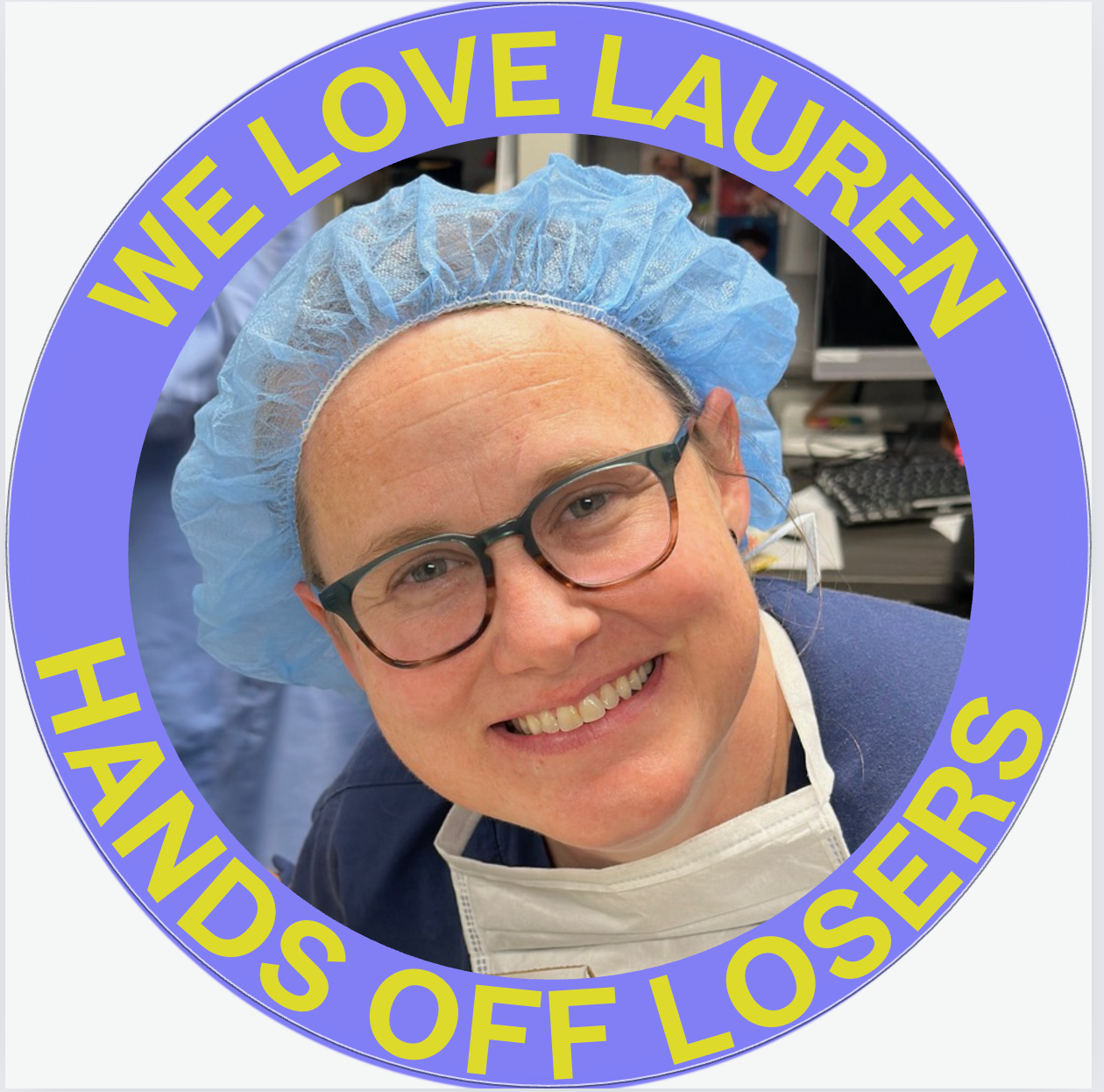
In our first contract campaign, we engaged nonunion workers in a safety petition we circulated in the wake of an active shooter threat. Later, Camelio and another union officer were suspended under threat of termination for union activity. Union and nonunion workers alike wore buttons and stickers with the union leaders’ faces and circulated a strike petition, until they were returned with full pay.
When the nurses walked out during the contract campaign, multiple departments organized sympathy strikes. A group of surgical technologists who walked out alongside the operating room nurses then sparked an effort to organize hundreds of technical workers. That was ongoing when the insurance cuts hit.
SUDDEN INSURANCE CUTS
Hospital worker health insurance plans were already bad, with high costs and poor coverage. But in November, management announced that a low-premium plan was eliminated, and the underlying coverage, co-pays, and deductibles in the other plans would get worse. Employees were sorted into five income-based “bands,” with sharp cliffs of premium increases.
Administrators blamed recent federal spending cuts. Those issues are certainly real, but the explanation fell flat coming from a profitable system that was handing out million-dollar raises to executives and constantly engaging in real estate deals. Just a month prior, CEO Chip Davis had been sent to a weeklong “retreat” on Richard Branson’s private island.
The unionized nurses had won contractual caps on costs and rules about how and when plans could change, so they were exempt from the higher premium bands. The difference was substantial.
“There were radiology techs and respiratory therapists who would be paying hundreds more a month than RNs,” said Jady Surrounding, an interventional radiology technologist who got involved in the technical workers’ organizing drive.
However, the boss forced other changes that violated our contract. We filed a grievance, but the arbitration wasn’t scheduled until this June (and a decision has not yet been released). It was clear that arbitration couldn’t be our primary way of pushing back.
CHATS LIT UP
Within hours of the announcement of the cuts, union chats were lighting up, and nonunion workers started reaching out. Some had previously been in touch; others found our website or social media for the first time. We soon encountered groups of nonunion employees who had begun organizing their own resistance, with meetings, actions, or going to the press. The kettle was roiling.

We faced a choice: Focus on the cuts affecting union members and tell other people to join the union if they wanted help, or immediately organize the broadest response for the largest group. We chose the latter.
First we put out a link for an emergency Zoom meeting, online and via flyers in the hospital, to discuss the cuts and make a plan. With only a couple of days’ notice, over 450 people joined; some people crowded into breakrooms to join the meeting together.
Next, we distributed thousands of stickers across the system (“Health Care Workers Deserve Good Health Care” and “Chip: Don’t Cut Our Care”); nonunion workers and family members helped print and distribute them. We made a petition and collected 2,300 signatures; a delegation of union and nonunion workers marched on the boss to deliver it.
When a union rep was suspended for handing out stickers to nonunion workers, there was once more a unified response—this time, winning a return to work within 24 hours.
The boss had to scramble to keep up. Within days, the CEO announced a pause on enrollment. Later, they came back with reductions in premiums adding up to millions of dollars. However, the other changes remained. It was a partial victory—enough to show the power of collective action, but proving the need for stronger organization.
‘HOW DO WE FORM A UNION?’
Many workers saw that need from the start. Already on the mass Zoom call, while we worked through an agenda about the insurance and how to push back, the chat was exploding with people asking, “How do we form a union?”
The bosses had shown who they were. We were showing who we were. “I had people coming up to me saying thank you for the union fighting for them too,” said Stacey Judson, a unit rep in the emergency department. “We just wanted fairness for everyone. We’re all needed to run the hospital.”
Organizing committees formed in several potential bargaining units; existing efforts were energized. Some of the new committees stalled once the moment passed, but others kept growing. Beyond the insurance was concern about what might be next: pension or wage cuts, layoffs, rumors of a sale to another system. No one knew what was coming, but they knew they needed a voice.
“We had people in departments we had been trying to reach for a year, who had been on the fence or not interested, start coming around,” said Surrounding.
Campaigns started going public in the new year. The employer responded by bringing in anti-union consultants, dishing out illegal retaliation, and ditching its local law firm for the infamous and expensive Littler Mendelson. But administrators had lost all credibility.
In February, a group of eight midwives voted unanimously to organize. In April, 300 technical workers won their election with 73 percent of the vote. In June, 126 phlebotomists across 31 labs won with 86 percent yes. And in July, 45 physicians, physician assistants, and nurse practitioners at 11 urgent care sites voted yes by 80 percent. RUNAP had grown to a union of nearly 1,600 workers across 47 facilities.
More workers may yet organize, with RUNAP or other unions. In the meantime, the nurse contract expires in April 2027, and all five bargaining units are preparing for a unified contract campaign that will again reach beyond formal union lines to engage all workers in the system.
Will McMahon is the lead organizer of the Rochester Union of Nurses & Allied Professionals.